"Search, summarize, and extract data from 138+ million academic papers in seconds — AI research assistant that helps scientists automate literature reviews and save 80% of their time."
Overview
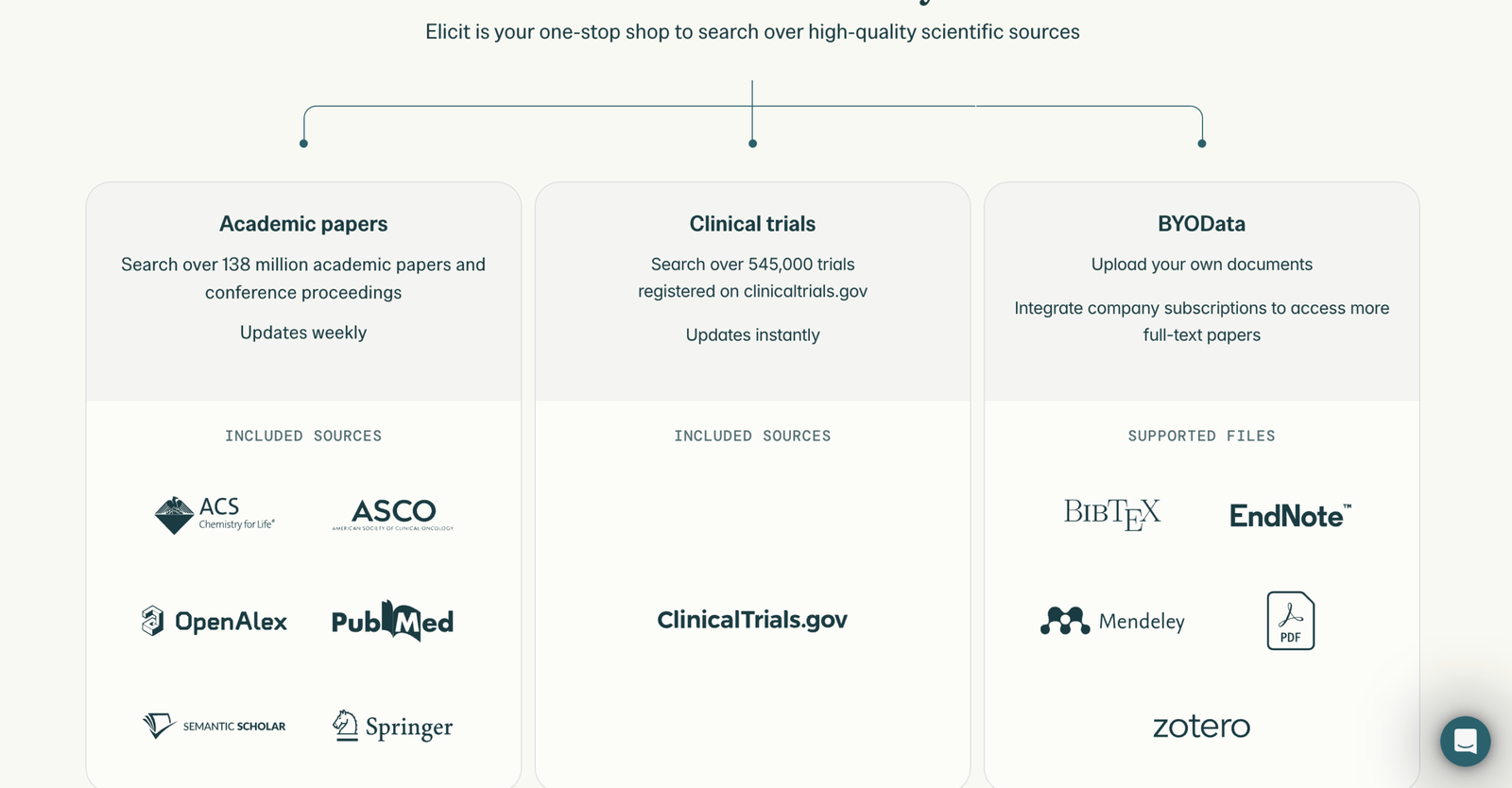
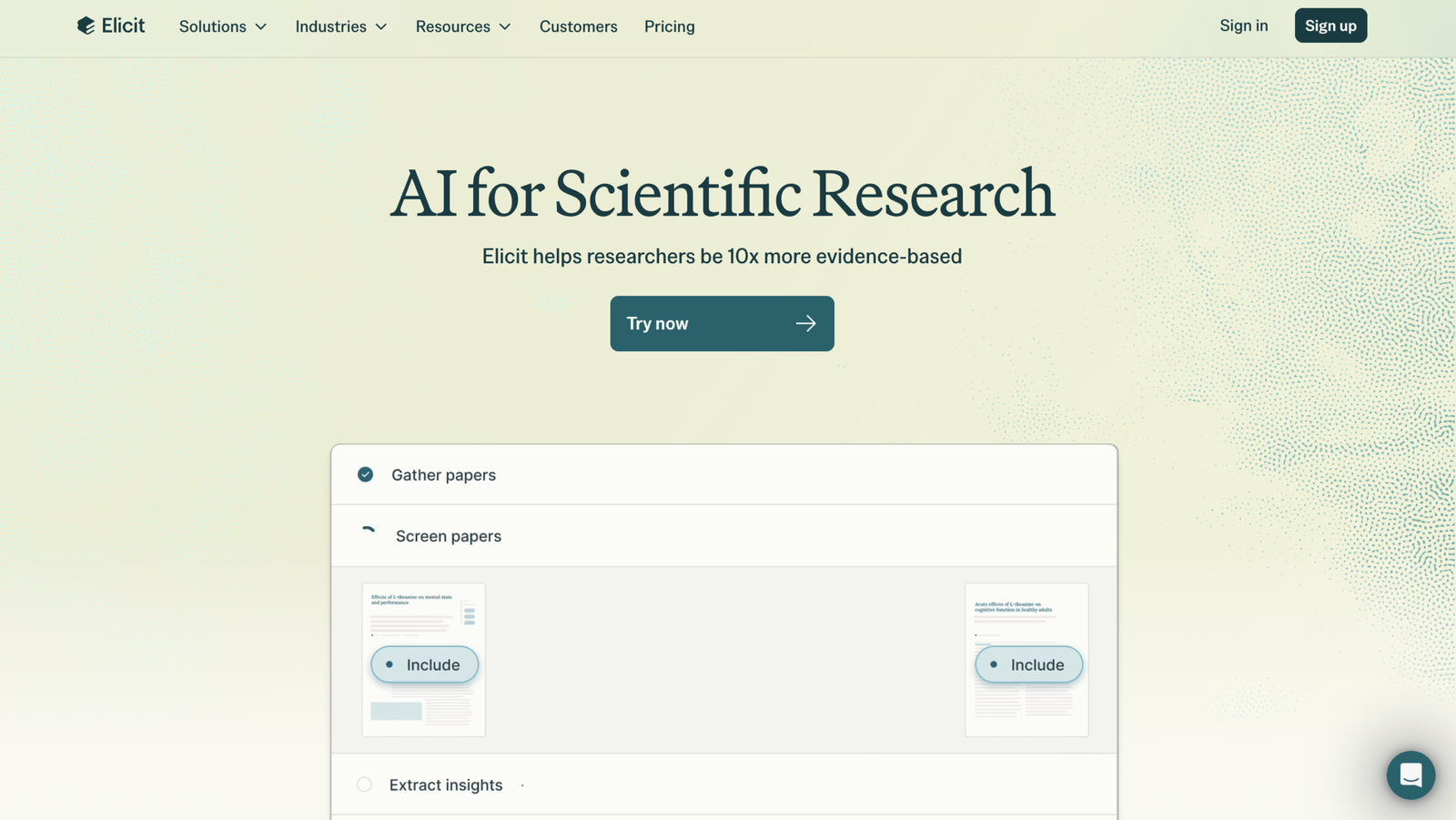
Elicit is an AI-powered research assistant for scientific research that helps researchers be 10x more evidence-based by automating time-consuming research tasks like summarizing papers, extracting data, and synthesizing findings. It can search, summarize, extract data from, and chat with over 138 million academic papers and 545,000 clinical trials, used by over 2 million researchers in academia and industry. Whether you need a quick answer to a research question or are planning a multi-month comprehensive literature review, Elicit supports you from beginning to end. The platform generates high-quality research briefs based on a process inspired by systematic reviews, and Elicit Systematic Review is a workflow that turns months of manual work into minutes by guiding researchers through each step while preserving rigor and accuracy. Developed by Ought in San Francisco, CA, Elicit is a public benefit company with a mission to scale up good reasoning and help machine learning assist as much with thinking and reflection as it does with tasks.
Key Features
Semantic Paper Search: Search 138M+ academic papers and 545K clinical trials with natural language questions — get relevant results with full metadata and summaries
AI Paper Summarization: Automatically summarize research papers into concise, easy-to-understand explanations with key findings and insights
Systematic Review Workflow: Gather papers, define screening criteria, evaluate screening decisions, extract data from screened-in papers — saves up to 80% of time
Data Extraction & Chat: Ask questions about papers, extract structured data, and chat with documents to get citations and view multiple sources
Use Cases
Academic Research & Literature Reviews: Automate systematic reviews, find references, analyze papers deeply, and discover research gaps without months of manual work
Clinical Research: Screen and extract data from 545,000 clinical trials for medical research, healthcare studies, and evidence-based decision making
Scientific Writing: Summarize papers for thesis writing, grant proposals, and research papers; synthesize findings and create research briefs automatically