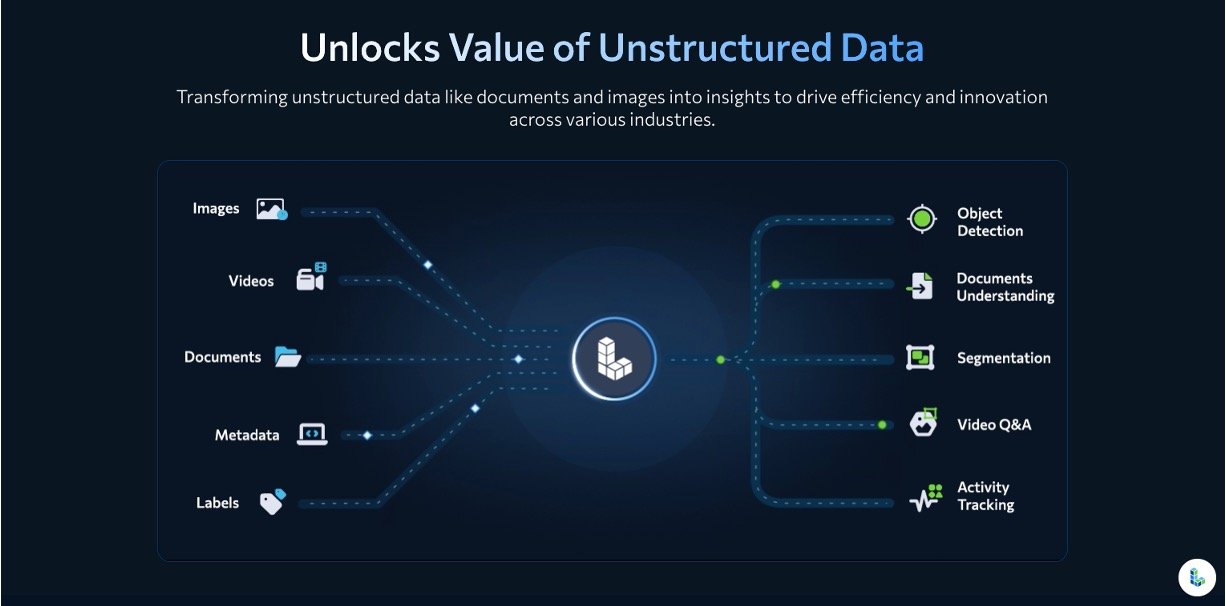
Landing AI is a visual AI platform that helps companies build, deploy, and scale computer vision solutions for images and documents, even if teams have limited AI expertise. It focuses on shortening the time from idea to production, with customers reporting up to 80% faster deployment, and is already used by more than 30,000 users across industries such as automotive, life sciences, electronics, and manufacturing. The platform runs inference on over 1 billion images per year with 99.99% uptime, making it suitable for production-grade workloads where reliability and accuracy are critical. Landing AI’s main products include LandingLens for building and deploying custom computer vision models, and Agentic Document Extraction for extracting structured data from complex documents.
Key Features
Visual AI platform for training, testing, and deploying deep-learning computer vision models end to end, with tools to manage data, labeling, model training, and deployment in one place.
Low-code / no-code environment (LandingLens) that lets domain experts build and refine visual inspection and classification models without needing deep machine learning experience.
Data-centric workflow with collaborative labeling, label books, and automated label-quality checks to improve data consistency and model accuracy, even with relatively small datasets.
Production-grade reliability, supporting over 1B image inferences per year with 99.99% uptime, and used by 30K+ users in industries like automotive, electronics, life sciences, and manufacturing.
Use Cases
Automated visual inspection on production lines, such as detecting defects in automotive, electronics, or packaged goods to improve quality control and reduce manual checks.
Document and form understanding through Agentic Document Extraction, turning complex, scanned, or layout-heavy documents into structured, analyzable data for regulated sectors like medical devices and pharma.
Industry-specific visual AI solutions across areas like infrastructure monitoring, life sciences imaging, and medical devices, where images and visual data drive operational decisions.