
Scite AI Review: Is it worth it for students and researchers?

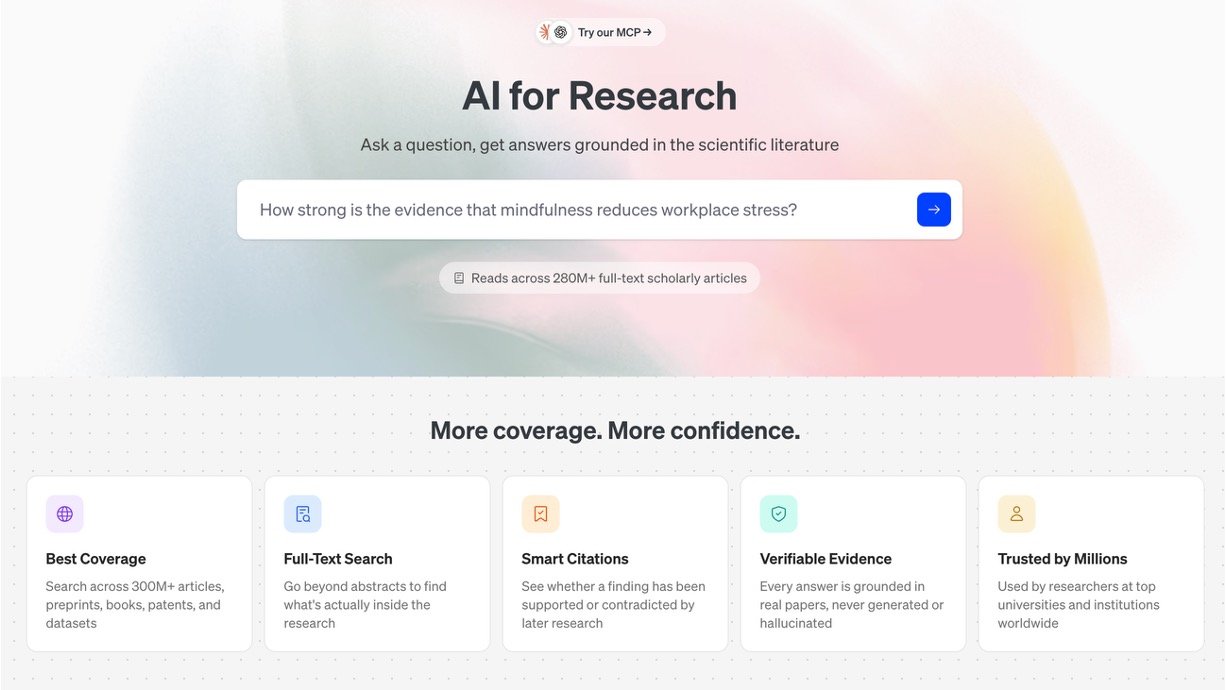
Scite is an AI research platform built for students, academics, medical professionals, and research teams. Its main advantage is that it does more than count citations. It shows whether later studies support, contrast, or simply mention a paper.
This makes Scite especially useful for literature reviews and evidence checking. Instead of opening dozens of papers to understand how a study has been received, you can view the relevant citation statements in one place. Its AI Assistant can also answer research questions using scholarly sources.
The platform feels more trustworthy than a general AI chatbot because its answers are linked to real publications. However, it should not replace reading the original research. Citation labels can be wrong, database coverage varies between subjects, and some results may include preprints or weak studies.
Overall, Scite is a focused and valuable tool for serious research, but its price may be difficult for students or occasional users.
Scite AI Key Features and Our Ratings
| Feature | What It Does | Our Rating |
| Smart Citations | Labels citations as supporting, contrasting, or mentioning | 4.7/5 |
| AI Assistant | Answers questions using academic literature | 4.4/5 |
| Literature Search | Searches papers, metadata, and citation statements | 4.5/5 |
| Citation Chaining | Explores papers cited by or citing another study | 4.4/5 |
| Reference Check | Reviews manuscript references for concerns | 4.5/5 |
| Collections and Dashboards | Saves papers and tracks citation activity | 4.2/5 |
| Browser Extension | Displays citation information while browsing | 4.3/5 |
| Ease of Use | Clean, but advanced tools need some learning | 4.0/5 |
Scite AI Key Features
1. Smart Citations
Smart Citations is the strongest reason to use Scite AI. You can see the sentence surrounding a citation and understand why another author referenced the paper. This is far more helpful than judging research by citation count alone.
However, the three labels simplify academic discussion. A citation may support one result while questioning the study’s method. Therefore, important citation statements still need manual review.
2. Scite Assistant
The Assistant works like a research-focused chatbot. I found its source-first approach more useful than broad AI answers when investigating scientific questions. You can control publication types, date ranges, topics, and other search settings.
Its answers are good for finding evidence and getting an overview, but they are not final conclusions. New, interdisciplinary, or poorly covered topics can produce incomplete results.
3. Search and Citation Chaining
Scite lets you search article titles, abstracts, authors, and citation statements. Citation chaining makes it easy to move backward to earlier research and forward to newer papers. This can save hours during a literature review.
4. Reference Check and Dashboards
Reference Check can scan a manuscript’s bibliography and highlight retractions, corrections, editorial notices, or contrasting citations. Dashboards and Collections help users organize papers, monitor topics, and receive alerts when new citations appear.
5. Pricing
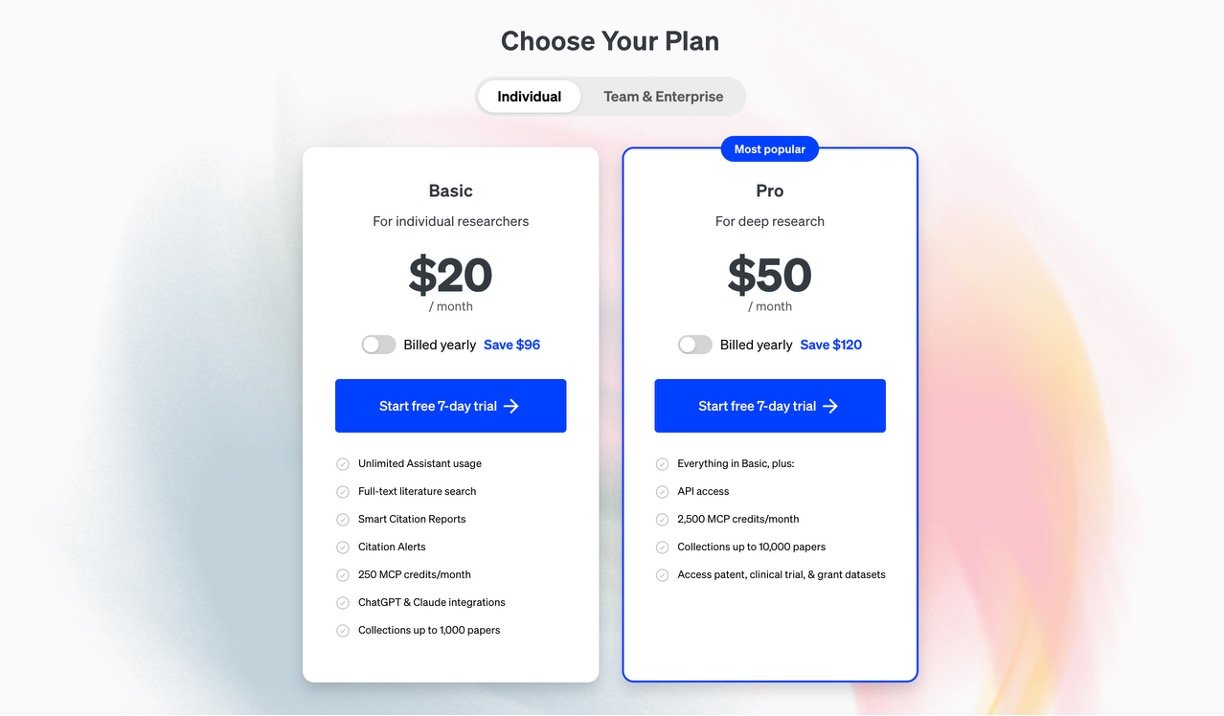
Scite’s individual plan currently costs $20 per month when billed annually, or $240 per year.
Pros and Cons
Pros: Excellent citation context, reliable source discovery, useful research filters, strong reference checking, and major time savings.
Cons: Expensive for some students, no permanent free plan, occasional citation misclassification, uneven subject coverage, and no complete academic writing workflow.
Our Verdict: Scite is one of the best tools for checking how research has been received. It is worth paying for if literature reviews and evidence evaluation are regular parts of your work.

