
Is Elicit AI Worth It? An Honest Researcher’s Review

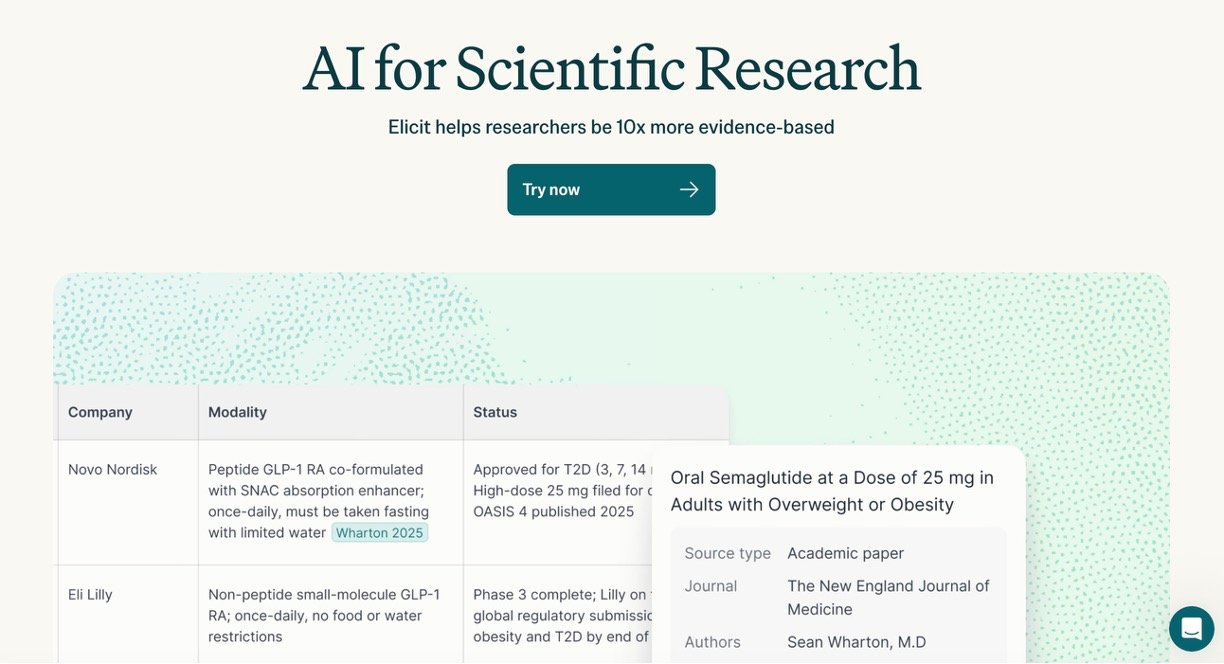
Elicit is an AI research assistant for finding, comparing, and analysing academic papers. Instead of relying on exact keywords, it lets you ask a question in normal language and returns relevant studies with source-linked answers.
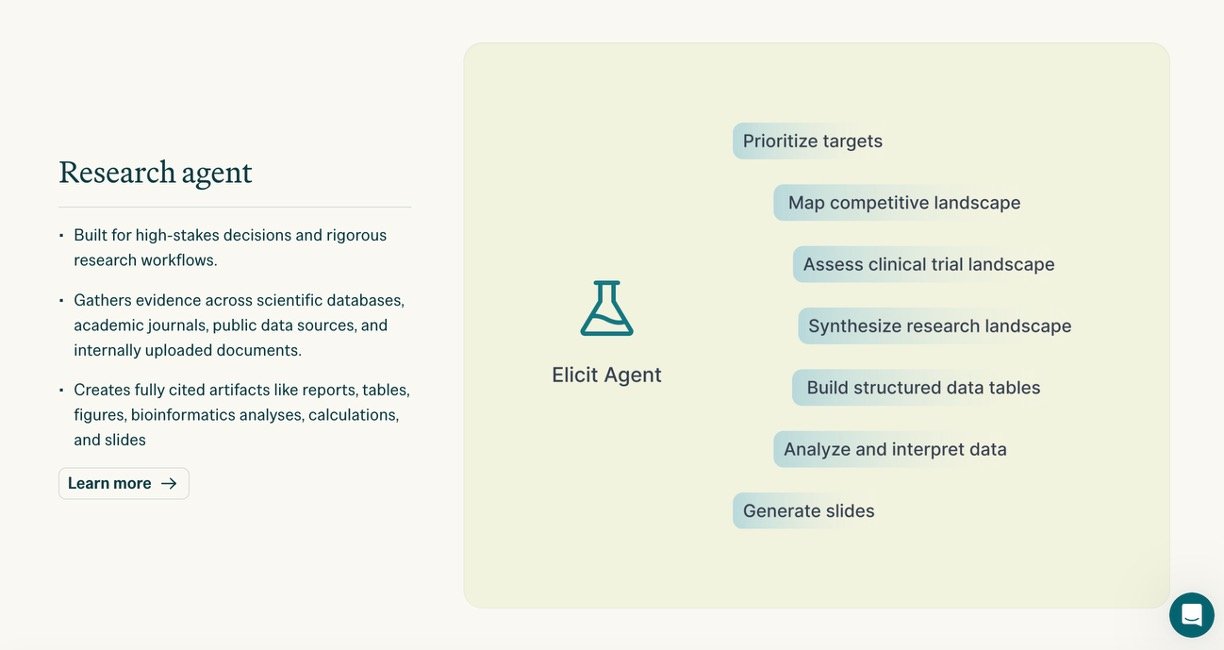
Elicit can search more than 138 million papers, create research reports, screen studies, extract data into tables, chat with full-text papers, and organize sources. It is especially useful for researchers, PhD students, evidence teams, and writers who need to understand a topic quickly.
My overall rating is 4.4/5. Elicit saves real time, but it should support research judgment—not replace it.
Elicit AI Key Features and Our Ratings
| Elicit AI Feature | Our Rating |
| Semantic paper search | 4.6/5 |
| Research reports | 4.5/5 |
| Data extraction tables | 4.4/5 |
| Systematic review workflow | 4.6/5 |
| Chat with papers | 4.3/5 |
| Source transparency | 4.7/5 |
| Library, exports, and Zotero import | 4.1/5 |
| Ease of use | 4.3/5 |
Elicit AI Key Features
Paper search: Enter a question instead of building a perfect Boolean query. Elicit finds conceptually related studies and shows details such as the abstract, study type, sample size, methods, and findings. This is excellent for exploring an unfamiliar topic.
Research reports: Elicit builds a customizable brief from multiple academic sources. The result is more research-focused than a general chatbot answer, and claims link to supporting passages.
Data extraction: Add custom columns and ask Elicit to pull the same information from many papers. This makes it easier to compare populations, interventions, outcomes, limitations, and other details.
Systematic reviews: The guided workflow covers paper gathering, inclusion and exclusion criteria, title and abstract screening, optional full-text screening, extraction, and report creation. Pro users can screen up to 5,000 papers per review. It supports PRISMA-style documentation, but researchers should still validate decisions and follow institutional standards.
Paper chat, library, and alerts: Elicit answers questions about accessible full texts, saves papers, imports from Zotero, and can alert paid users to relevant new research.
Pros and Cons
The main advantages are speed, a clean interface, strong evidence tables, and sentence-level links to supporting text. It is particularly good for the first pass through a large topic. Community feedback also praises its paper discovery and organized workflow.
The weaknesses matter. Results can include obscure studies while missing expected papers. AI extraction may simplify complex methods, overlook numbers, or misunderstand subgroup findings. Full-text access also affects answer quality. Figure interpretation is limited to the Scale plan, and the best systematic-review features require payment. Always open the original paper before using a claim, number, or screening decision.
Elicit AI Pricing
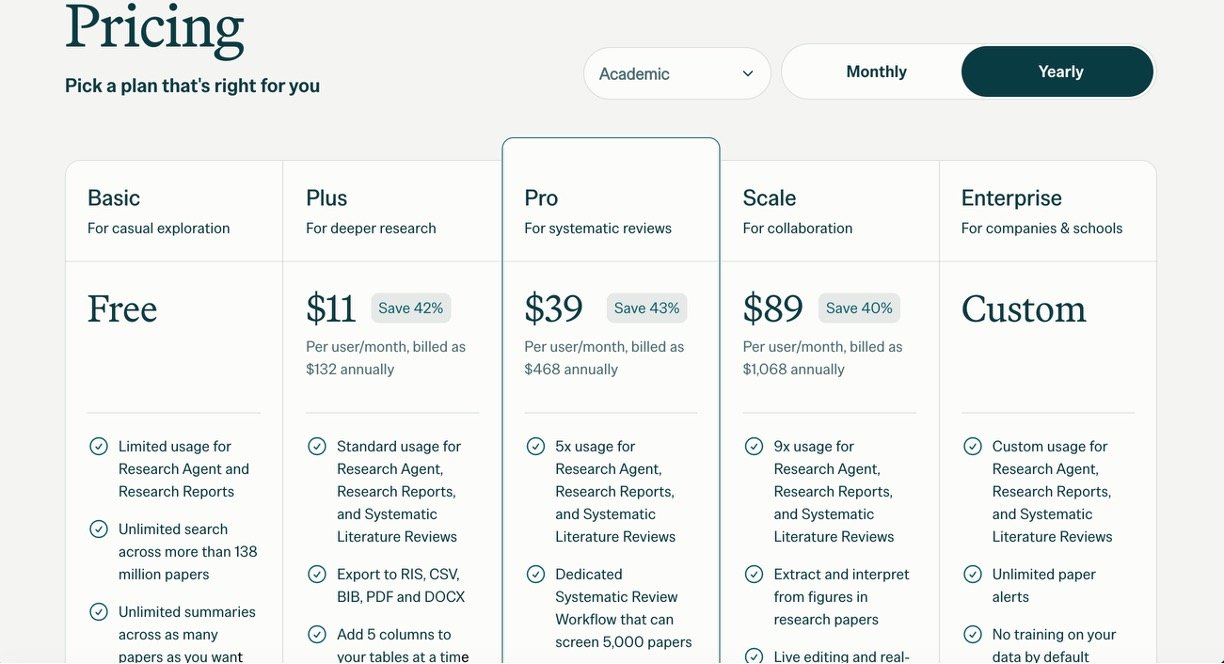
Basic is free and includes unlimited search, summaries, full-text paper chat, source viewing, and Zotero import, with limited report usage. Plus costs $11 per user/month when billed annually and adds exports, clinical-trial search, and standard workflow usage. Pro costs $49 monthly or $39/month annually; it adds the systematic-review workflow, custom extraction, alerts, explanations, and API access. Scale costs $169 monthly or $89/month annually and adds collaboration, figure extraction, larger reports, and admin controls. Enterprise pricing is custom.
Final Verdict
Elicit is one of the best AI tools for evidence-heavy research. Use it to discover, screen, compare, and organize papers faster. Do not treat it as an automatic authority. For serious academic work, it works best as a skilled assistant while a human makes the final decisions.

