
Jenni AI Review 2026: Is It Worth It for Academic Writing?

Jenni AI Review 2026: Is It Worth It for Academic Writing?
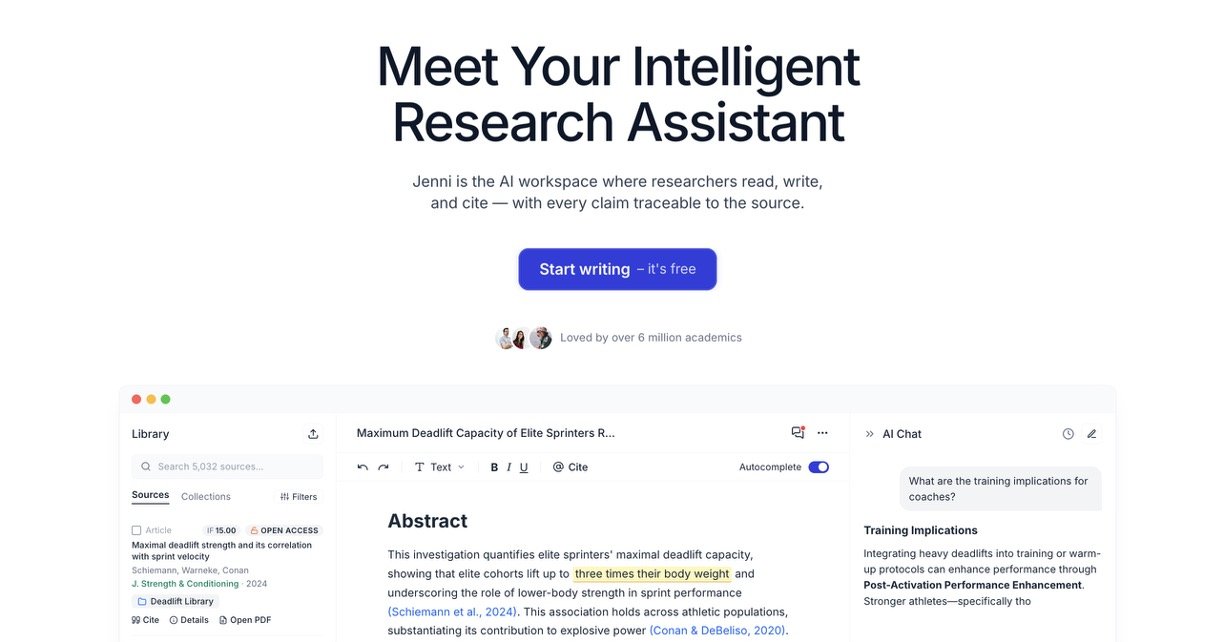
Jenni AI is an academic writing and research assistant for students, researchers, and professionals. It brings drafting, source discovery, citations, PDF reading, editing, and document review into one clean workspace.
Its biggest advantage is workflow. Instead of moving between a chatbot, reference manager, PDF reader, and word processor, you can write and cite in the same editor. Autocomplete is useful when you know your argument but struggle to turn it into clear sentences. Jenni can also work from uploaded sources, making it more suitable for research writing than a general AI writer.
Scite AI Review: Is it worth it for students and researchers?
However, it is still an assistant, not an academic expert. Some suggestions can sound generic, repeat ideas, or weaken your style. Citations link to identifiable sources, but every reference and supporting claim should be checked before submission.
Jenni AI Key Features and Our Ratings
| Feature | Our Rating |
| AI Autocomplete | 4.3/5 |
| Smart Citations | 4.4/5 |
| Research Library and PDF Chat | 4.5/5 |
| AI Editing | 4.2/5 |
| Reviews and Claim Confidence | 4.3/5 |
| Ease of Use | 4.6/5 |
| Overall Rating | 4.3/5 |
Key Features
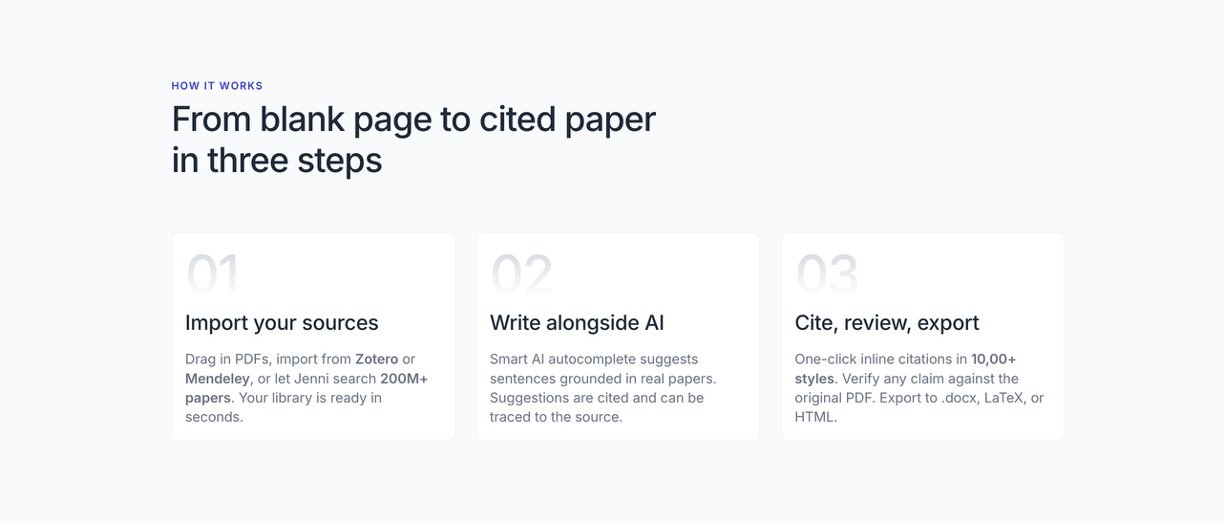
AI Autocomplete: Jenni suggests the next sentence as you write. You can accept it, retry, or continue in your own words. It helps with introductions, transitions, outlines, and first drafts. Longer output still needs editing because it can become repetitive or broad.
Smart Citations: Search for academic sources and insert citations without leaving the editor. Jenni supports more than 10,000 citation styles and updates the bibliography automatically. Filters for year and citation count improve discovery. This is a standout feature, but always open the paper and confirm that it supports your claim.
Library and PDF Chat: Upload papers or import references from Zotero, Mendeley, BibTeX, RIS, DOI, or a URL. Jenni can answer questions about PDFs and use selected documents as context. Zotero and Mendeley imports are one-way, so new references need re-importing.
Consensus AI Review 2026: Is It Worth Using?
AI Editing: Highlight text to paraphrase, simplify, improve fluency, change tone, translate, strengthen an argument, or create a counterargument. The side-by-side changes are easy to review, although edits do not always preserve a distinctive voice.
Reviews: Jenni checks proofreading, tone, source quality, and claim confidence. It flags unsupported, weak, overstated, contradicted, or unverifiable claims. This is helpful before supervisor review, but it cannot judge research design, novelty, or journal readiness like a subject expert.
Pricing
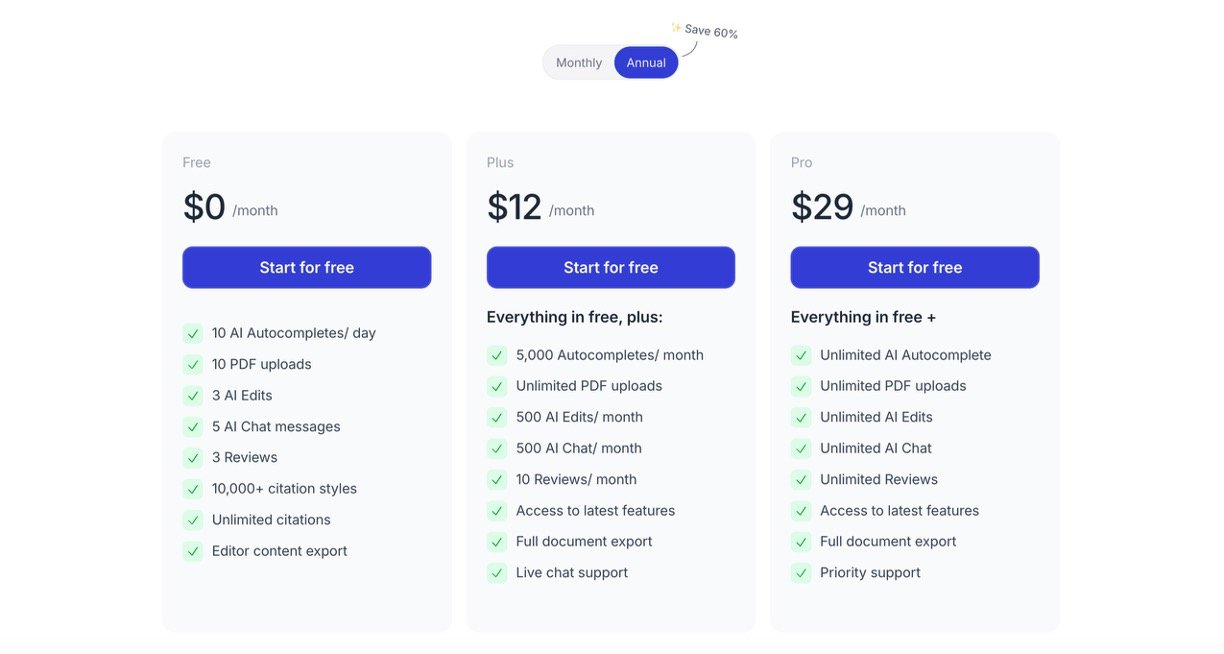
Free includes 10 autocompletes per day, 10 PDF uploads, five chat messages, three edits, and three reviews.
Plus costs $30 month-to-month or about $12 per month with annual billing. It provides 5,000 monthly autocompletes, 500 chats, 500 edits, 10 reviews, unlimited uploads, and full export.
SciSpace Review: Is It Good for Academic Research?
Pro costs $73 month-to-month or about $29 per month annually. It removes the main AI usage limits and adds priority support. Prices are in US dollars; local pricing may differ.
Pros and Cons
Pros: Clean interface, strong citation workflow, useful PDF chat, reference-manager support, and good help with writer’s block.
Cons: Text can feel generic, citation matching is imperfect, imported formatting may change, journal formatting is limited, and monthly plans are expensive.
Is Elicit AI Worth It? An Honest Researcher’s Review
Our Verdict
Jenni AI is a strong choice for researchers who want to draft, cite, and review in one place. It works best for early drafts, literature-based writing, and language improvement. Use it to save time—not to replace reading, critical thinking, or source verification.

